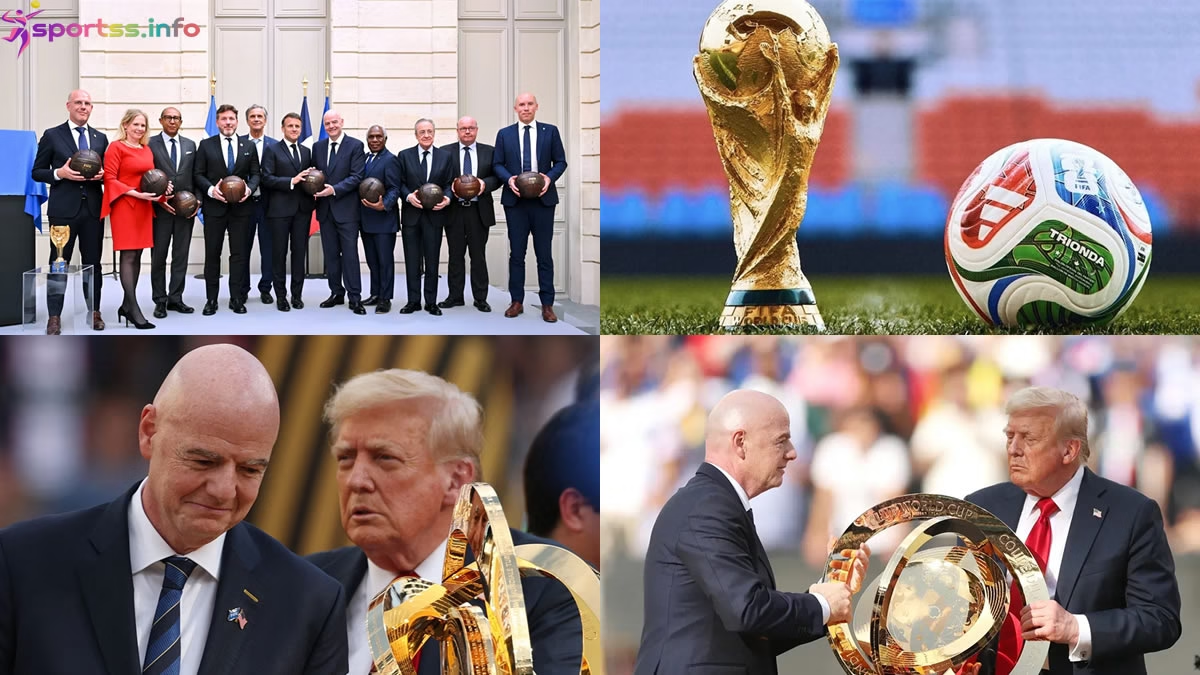
FIFA 2026: For nearly a century, the FIFA World Cup has been the crown jewel of global soccer, uniting nations in pursuit of the sport’s most coveted trophy. Over the decades, the path to the tournament has changed dramatically. The qualifying process the journey teams take to reach the World Cup has evolved through numerous reforms.
Welcome to Sportss.info, the place where true fans meet the heart of sports. We bring you fresh updates, inspiring stories, and insights from the world’s biggest games and hidden gems alike. From the roar of the FIFA 2026 to the spirit of the Olympics, every moment is covered with passion and clarity.
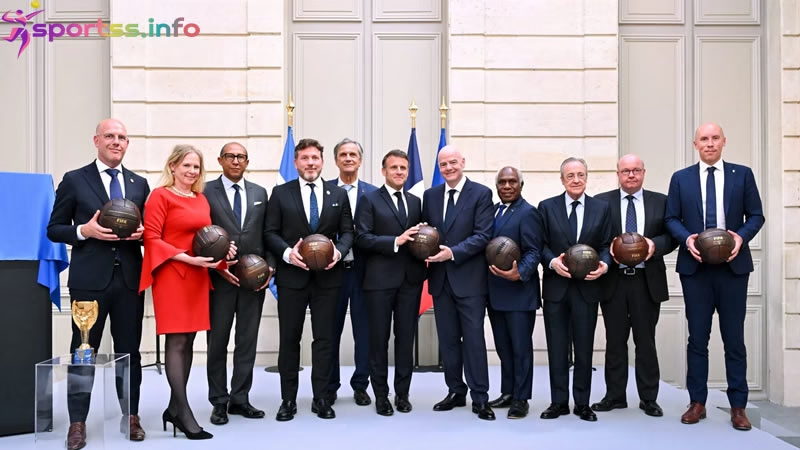
Reflecting soccer’s global growth and FIFA’s efforts to balance competition and inclusion. Now, as the world prepares for the FIFA 2026 in the United States, Canada, and Mexico. A record 48 nations will take part in the final tournament, the largest field in the event’s history.
This expansion marks another milestone in the World Cup’s evolution, giving more nations than ever before the opportunity to compete on the sport’s biggest stage. But how exactly do teams qualify? And how has this system developed over time?
Each confederation receives a specific number of qualification slots, determined by FIFA based on factors such as regional strength, historical performance, and global representation. The member nations within each confederation then compete in qualification tournaments to earn their spots.
While FIFA provides general guidelines, each confederation designs its own format. This flexibility allows for systems that reflect the unique geography, number of teams, and competitive balance of each region. For example, South America’s CONMEBOL features a smaller number of teams but uses a rigorous league-style system.
FIFA World Cup: Inside FIFA’s Approved Qualifying Systems
While Africa and Asia must manage far larger membership bases with multiple qualifying rounds. Every confederation uses one or more of FIFA’s approved formats. These include: Double round-robin (league format): Teams in a group play each other twice, home and away, with points awarded for wins and draws.
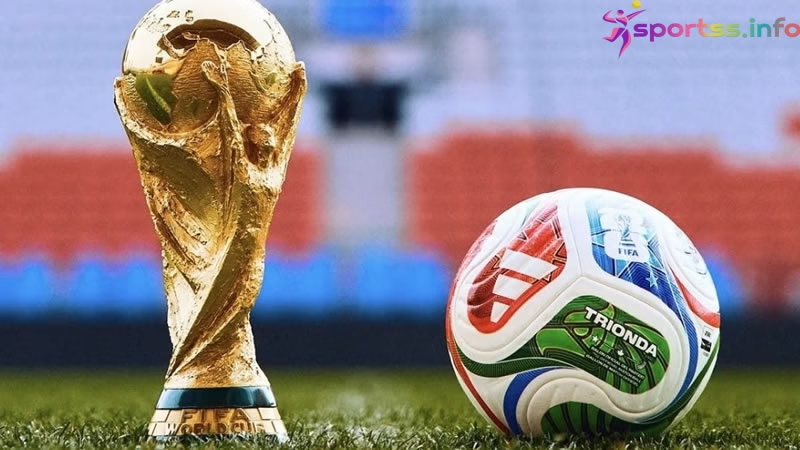
Single round-robin: Teams play each other once, often in a centralized location. Knockout format: Teams face off in two-legged ties, playing one match at home and one away, with the aggregate score deciding the winner.
Tournament format: Occasionally, qualifying is decided in a single-host competition involving multiple teams. The formats can vary dramatically. Some regions, like Europe, rely primarily on group stages, while others, like Oceania, use knockout-style tournaments.
Regardless of structure, the aim remains the same: to determine which nations earn the right to represent their region at the World Cup. For FIFA 2026, qualification has been restructured to account for the expanded 48-team field. With 209 FIFA member nations worldwide, nearly one in four will participate in the final tournament, an unprecedented level of global inclusion.
The remaining two spots will be decided through the Intercontinental Playoffs, a mini-tournament involving teams from several confederations. Qualification typically begins shortly after the previous World Cup ends. For example, CONMEBOL, with its lengthy 18-match round-robin, starts early, often just months after the last tournament.
Other regions, such as Asia and Africa, begin within a year but introduce lower-ranked teams gradually. Europe’s UEFA, which has fewer rounds, starts its qualifiers about a year and a half before the World Cup.
Europe’s Road to the FIFA World Cup 2026
The qualification phase must be completed before the official World Cup draw, which is held about six or seven months before the tournament kicks off. Europe’s UEFA confederation has the largest number of member nations and the most qualifying spots, 16 in total. For FIFA 2026, UEFA qualification consists of two main phases.
In the first round, all European nations are divided into 12 groups: six groups of four teams and six groups of five. Each group plays in a round-robin format, and the winner of each group automatically qualifies for the World Cup.
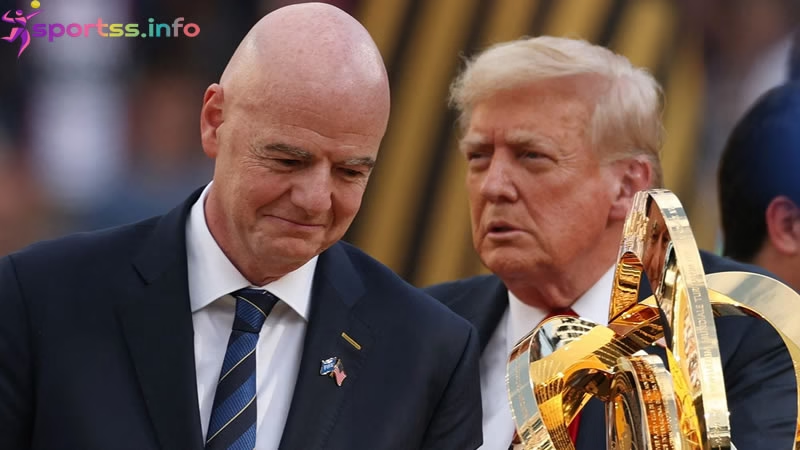
The second round gives a second chance to strong teams that fell just short. The 12 group runners-up join four additional teams, the best performers from the UEFA Nations League who have not yet qualified. These 16 teams are drawn into four mini-brackets. Each bracket’s winner earns one of the final four European spots.
World Cup qualifying is often as thrilling and dramatic as the tournament itself. It produces unforgettable moments, underdog triumphs, heartbreaking eliminations, and legendary performances. From smaller nations achieving historic qualifications to giants stumbling under pressure, the process embodies the unpredictable spirit of global football.
As the world turns its attention toward FIFA 2026, the expanded qualification system reflects FIFA’s goal of making the FIFA World Cup more inclusive and representative of the global game. The journey to reach the tournament remains long and challenging for every nation involved.
At Sportss.info, we bring you more than just scores and stats. You’ll find the latest sports news, real stories, and moments that truly matter to fans everywhere. From global tournaments to the rise of new athletes, our goal is to keep you close to the action that excites and inspires.